
The best wireless earbuds under 100 are usually the ones that match your daily routine, not the ones with the longest spec sheet, because fit, mic tuning, and app support can matter more than an extra codec.
If you’ve ever bought “budget” earbuds that hiss, fall out, or die mid-commute, you already know the pain: under $100 can be amazing, but it can also be a minefield. The good news is that 2026’s sub-$100 segment is mature, and a handful of models consistently get the fundamentals right.
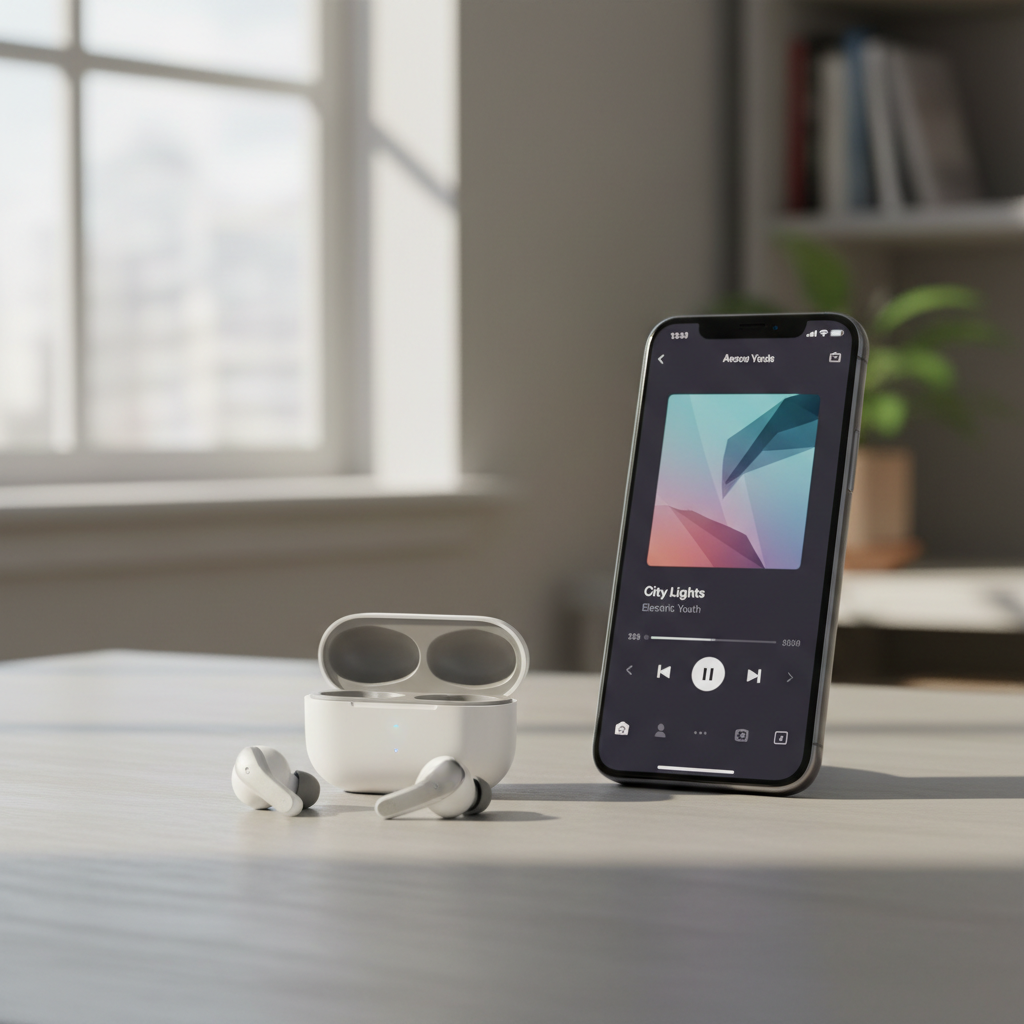
I’m going to keep this practical: a short list of what to prioritize, a comparison table, and a quick “pick-by-scenario” guide, so you can buy once and stop thinking about it.
Quick picks: what most people should buy
Without knowing your ears, phone, and commute, there’s no single winner. Still, these are the “safe bets” categories that tend to satisfy most shoppers under $100, especially in big U.S. retailers.
- Best all-around value: Balanced tuning, solid app, dependable connection, decent calls.
- Best for calls (quiet office): Clear voice pickup, less aggressive noise reduction artifacts.
- Best for workouts: Stable fit, sweat resistance, physical controls you can hit with wet hands.
- Best for noise blocking on a budget: Passive isolation first, then “good-enough” ANC.
One honest note: under $100, “premium-level ANC” is uncommon. If you want silence, you’ll usually get more by choosing earbuds that seal well and using the right ear tip size.
Comparison table: what to compare (and what to ignore)
Specs can distract. This table focuses on the traits that most often decide whether earbuds feel like a deal or a mistake.
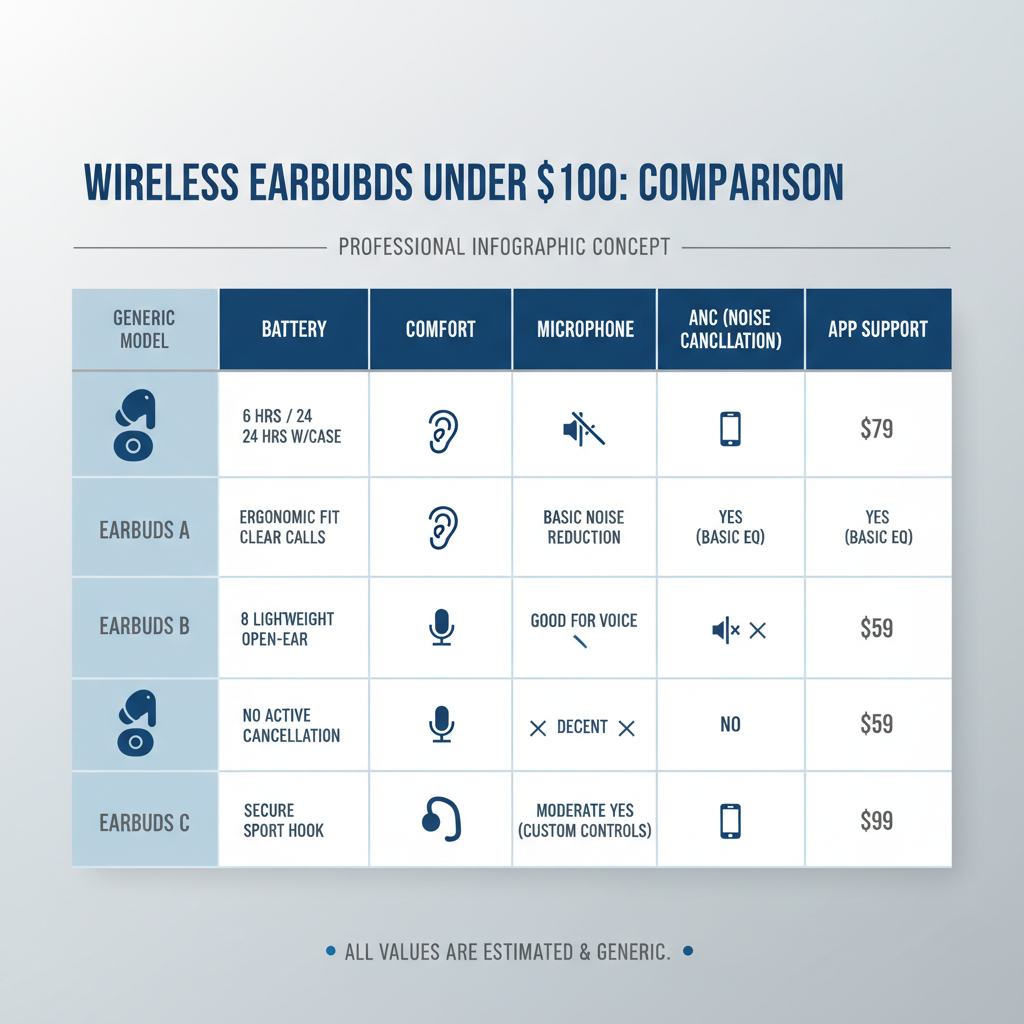
At-a-glance comparison (generic model types)
| Type under $100 | Who it’s for | What’s usually good | Common compromise |
|---|---|---|---|
| “Value all-rounder” | Most people | Balanced sound, stable Bluetooth, usable app | ANC only moderate, case feels basic |
| “Call-focused” | Zoom/Teams, phone calls | Clear mids, strong voice pickup | Music bass can feel light, ANC varies |
| “Sport/secure-fit” | Gym, runs | Stability, buttons, sweat resistance | Bigger shells, wind noise outdoors |
| “Budget ANC” | Commute, coffee shops | Reduces steady low hum | Less natural sound, ANC hiss possible |
Key features that actually matter
- Fit and seal: If the seal is weak, bass disappears and ANC can’t do much.
- Mic consistency: Not “loud,” but stable tone without pumping or robotic artifacts.
- App EQ: A basic EQ can fix harsh treble or boomy bass in 30 seconds.
- Battery behavior: Real battery depends on volume and features, so look for comfort with the charging routine, not just the number on the box.
- Controls: You’ll use them every day. Bad touch controls are a quiet dealbreaker.
Why under-$100 earbuds go wrong (real-world causes)
Most returns don’t happen because the earbuds are “bad.” They happen because one of these mismatches shows up on day two.
- Tip size mismatch: People try the default tips, hate the sound, and never try the larger size that would fix it.
- Expecting ANC to cancel voices: Many budget models handle engine/AC rumble better than speech, that’s normal.
- Bluetooth environment: A crowded apartment building or busy gym can expose weaker radios.
- Call noise reduction turned too high: Some earbuds “eat” your voice to kill background noise, it sounds clean but unnatural.
- Codec confusion: On iPhone, AAC support matters more than chasing high-res Android codecs you won’t use.
According to FCC, Bluetooth devices share the 2.4 GHz band with many other products, so interference can be a practical issue in dense areas, even when the earbuds are fine on paper.
5-minute self-check: pick the right category for you
Before you chase the “top rated” list, answer these quickly. Your answers point to the type of earbuds that are most likely to feel like the best wireless earbuds under 100 for you.
- Where do you listen most? Quiet home, office, subway, airplane, gym.
- Calls per week? Rare, a few, daily.
- Sensitive to pressure? If yes, avoid aggressive ANC or choose models with pressure-relief vents.
- Preferred sound? Bass-heavy, balanced, brighter vocals/podcasts.
- Device ecosystem? iPhone, Android, Windows laptop, mixed.
If you’re stuck between two categories, prioritize fit/comfort first. A slightly worse mic is annoying, but earbuds you can’t wear for an hour get abandoned.
How to shop smart in 2026 (without overpaying)
This is the part most guides skip: pricing under $100 fluctuates constantly. A “$129” model that’s often discounted can be a better buy than a “$79” model that never improves.
- Set a hard ceiling: $100 all-in, including tax if your budget is tight.
- Check return policy: Comfort is personal, so an easy return matters more than one extra feature.
- Look for multipoint only if you’ll use it: Great for laptop + phone switching, otherwise ignore.
- Don’t overvalue hi-res claims: For most listeners, tuning + seal beats codec marketing.
- Budget for tips: Foam or fit kits can transform comfort and bass for relatively little.

Practical buying checklist (copy/paste)
- Comfort test: 20 minutes in-ear, no hotspots.
- Seal test: Low bass track sounds full at moderate volume.
- Walking test: Minimal thumps (occlusion) and no dropouts.
- Call test: Record a voice memo in a noisy room.
- Controls: Can you pause, skip, and toggle noise modes reliably?
Setup tips that make budget earbuds feel “more expensive”
Even the best wireless earbuds under 100 can sound mediocre with default settings. These tweaks usually help, and they take under ten minutes.
Dial in fit before EQ
- Try the next larger tip size if bass feels thin.
- If earbuds feel “plugged,” try a slightly smaller size or different shape.
- For workouts, prioritize stability over max isolation, you’ll get fewer readjustments.
Use EQ lightly
- If vocals sound buried, reduce bass slightly before boosting mids.
- If cymbals feel sharp, lower the 6–10 kHz region a touch.
- Avoid extreme boosts, they can introduce distortion at higher volumes.
Make calls clearer
- Turn off “wind reduction” indoors if it makes your voice warble.
- On laptops, select the earbuds as both input and output, mixed devices can cause weird levels.
According to CDC, listening at high volumes for long periods can increase risk of hearing damage, so keeping volume moderate and taking breaks is a safer habit. If you’re unsure about hearing issues, it’s reasonable to consult a healthcare professional.
Common mistakes (and how to avoid them)
- Buying for ANC only: Under $100, treat ANC as a bonus, not the whole reason.
- Ignoring latency: Gamers should look for a low-latency mode, otherwise lipsync can bother you.
- Assuming “waterproof” means anything: Ratings vary, and sweat is different from submersion, so rinse/clean guidance matters.
- Skipping firmware updates: Many earbuds improve connection stability and mic behavior after updates.
- Chasing max volume: If you need very loud output to enjoy music, the seal is often the real problem.
Conclusion: a simple way to choose today
If you want one rule that holds up, pick the model type that matches your main use case, then validate it with a fit-and-call test inside the return window. That approach beats hunting a mythical “perfect” pair.
Action steps: narrow to two candidates (one comfort-first, one feature-first), then spend five minutes on the checklist above. You’ll end up with earbuds you actually use, and that’s the whole point.
If you want, tell me your phone model, top listening spot (gym, commute, home office), and whether calls matter, and I can point you toward the most likely “hit” options in the under-$100 range.
FAQ
What are the best wireless earbuds under 100 for iPhone users?
Look for stable AAC performance, an app that doesn’t feel half-baked, and a comfortable seal. On iPhone, codec chasing matters less than tuning and connection reliability.
Can budget earbuds have “real” noise canceling?
Many can reduce steady low-frequency noise, like HVAC or engine hum, but voices and sudden sounds often leak through. A strong passive seal usually does more than you expect.
How do I know if earbuds will fit my ears before buying?
You can’t know with certainty, which is why return policy and included tip sizes matter. If a brand sells optional fit kits, that’s often a good sign they take comfort seriously.
Are cheap earbuds safe for workouts and sweat?
Many are fine for sweat, but protection levels vary by model. If you sweat heavily, pick something with a clear water-resistance rating and avoid charging until the contacts are dry.
Why do my earbuds sound thin even though reviews say they have bass?
Usually it’s the seal, not the driver. Try a larger tip size and re-seat the earbuds; you’ll often hear bass return immediately.
Do I need multipoint Bluetooth under $100?
Only if you regularly switch between laptop and phone. If you mostly use one device, you can skip it and spend your “budget” on comfort and mic quality instead.
What should I do if call quality is bad in noisy places?
Test different noise-reduction modes, and don’t assume “max suppression” is best. If your job depends on calls, consider stepping up budget or using a dedicated headset mic in the loudest environments.
If you’re shopping right now and want a more effortless path, build a short list around your main scenario, then only compare the few features you’ll feel daily, comfort, mic consistency, and controls. That’s usually where under-$100 earbuds either earn their spot or get returned.