
Best budget earbuds with noise cancellation exist, but the tricky part is separating “ANC on the box” from earbuds that actually cut down subway rumble, office HVAC, or airplane drone in real use.
If you buy on price alone, you usually end up paying twice, once for the cheap pair that hisses or falls out, then again for the pair you should have bought. The good news, you can shop smarter by focusing on a few specs and a couple of quick tests.
This guide breaks down what matters most for affordable noise-canceling earbuds, where brands commonly cut corners, and how to choose based on your day-to-day scenario, commuting, calls, workouts, or all of the above.
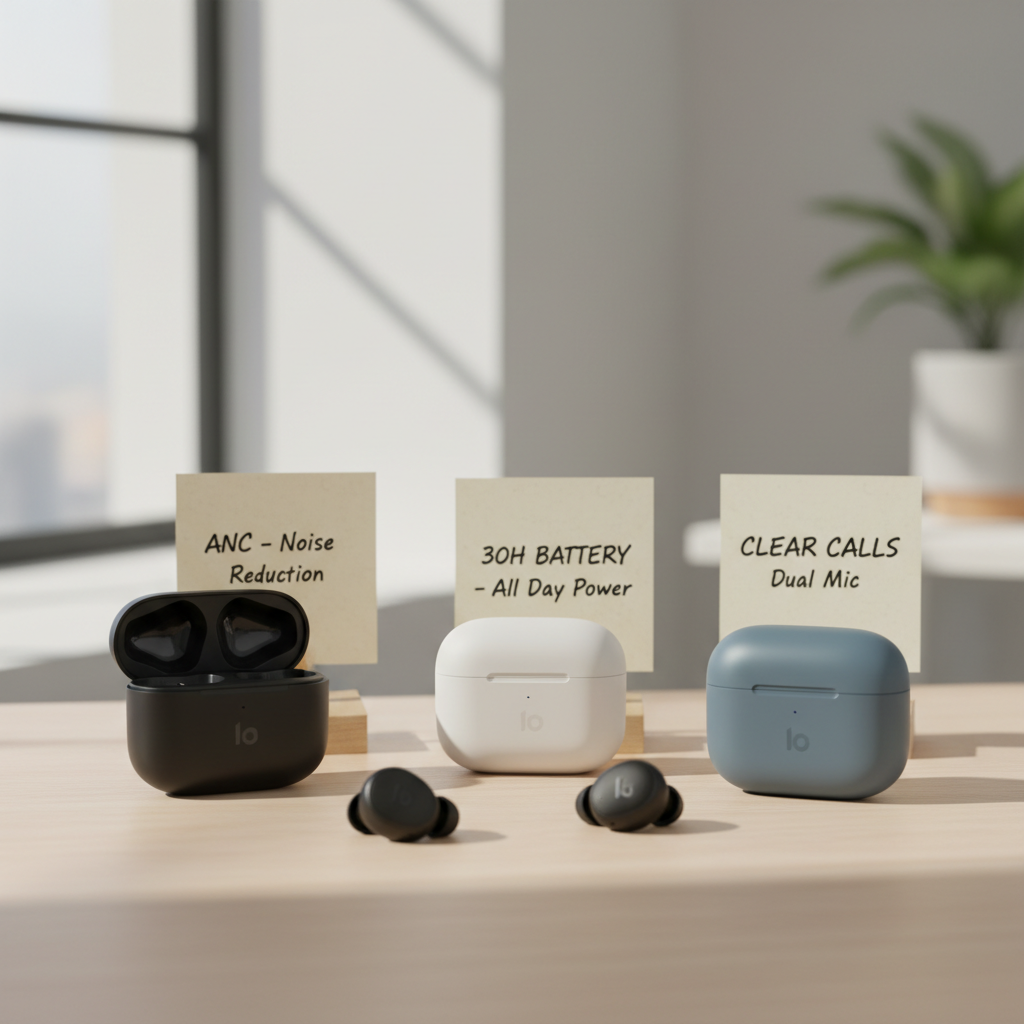
What “noise cancellation” means at the budget level
In cheaper earbuds, “noise cancellation” can mean a few different things, and that’s where expectations go off the rails. You’ll usually see a mix of passive isolation and active noise cancellation (ANC), plus software features that vary a lot by brand.
- Passive isolation: the ear tips block sound like earplugs. Often the biggest factor in perceived quiet.
- ANC: microphones listen to outside noise, then the earbuds play an inverse signal to reduce it. Best at low, steady sounds.
- Transparency/Ambient mode: pumps outside sound back in, useful for safety and conversations, quality ranges from “fine” to “windy and harsh.”
According to Apple Support, Active Noise Cancellation works by countering external noise with anti-noise, which explains why rumble drops more than sharp voices. That basic physics applies whether the earbuds cost $60 or $260, the difference is how well the hardware and tuning execute it.
Why budget ANC earbuds disappoint (and what to prioritize instead)
Most frustration comes from a few predictable weak spots. If you know them upfront, you can avoid the common “looks good on paper” trap.
1) Fit and seal beat fancy specs
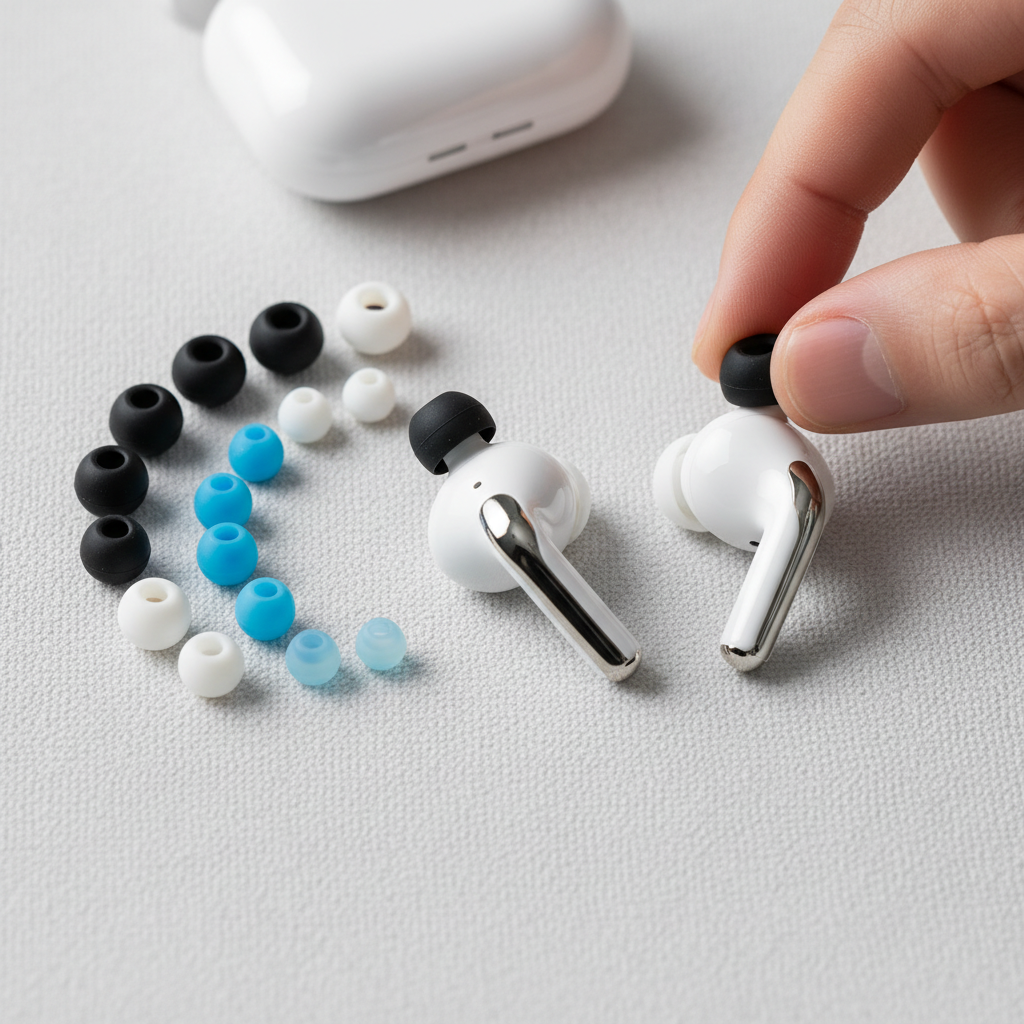
ANC can’t fix a bad seal. If tips don’t match your ear canal, bass leaks out and outside noise leaks in, then cancellation performance feels weak and music sounds thin. Look for earbuds that include at least 3 tip sizes, and ideally more.
2) Mic quality varies more than sound quality
Many budget models sound “good enough” for music, but calls reveal the truth. Background noise suppression can get aggressive, making your voice sound watery or distant. If calls matter, prioritize models known for stable voice pickup and decent wind handling, even if ANC is only mid-tier.
3) App support can be half-baked
EQ, ANC strength, firmware updates, and control customization often live in the app. If the app is buggy or never updated, you’re stuck with default tuning. A decent app is a real value multiplier in the under-$100 category.
4) Battery claims often ignore real ANC use
ANC usually reduces battery life. Treat “up to” numbers as optimistic, especially at higher volumes. If you need long shifts or travel days, a stronger case battery and quick charging matter more than headline single-charge time.
Quick self-check: which kind of budget earbuds should you buy?
Before comparing models, match your priorities to a “type.” This prevents overpaying for features you won’t notice.
- Commute-focused: strong low-frequency ANC, secure fit, stable connection, easy controls.
- Call-heavy: consistent mic pickup, wind reduction, sidetone or transparency that doesn’t sound robotic.
- Workout-focused: comfort, IP rating, stability, physical buttons or reliable touch controls with sweat.
- All-rounder: balanced ANC + mics + app EQ, decent battery, multipoint if you switch devices.
If you only pick one “must-have,” make it fit. Everything else becomes easier after that.
Buying checklist: what to look for under $100
Here’s the practical checklist I’d use if I were shopping for the best budget earbuds with noise cancellation today. Not every model will hit every box, so pick what matches your self-check above.
- Comfort and seal: multiple tip sizes, stable shape, not overly bulky.
- ANC with adjustable levels: at least two strengths, plus an “off” option.
- Transparency mode quality: natural voices, manageable wind noise.
- Call performance: clear voice indoors, acceptable outdoors, not overly compressed.
- Codec support: AAC for iPhone users, and some Android-friendly options like aptX on certain models, though not required for most listeners.
- Controls: volume control on-ear is a big convenience, accidental touches are a deal-breaker for some people.
- Battery reality: look for solid case capacity and quick-charge, not just single-use hours.
- Return policy: because fit is personal, a good return window is part of the “spec sheet.”
According to Federal Trade Commission (FTC) guidance on shopping, comparing total cost and understanding return terms helps avoid unpleasant surprises, which is especially relevant when you’re buying budget tech with variable fit.
Comparison table: what “good” looks like at different budget tiers
This isn’t a list of specific models, it’s a quick benchmark so you can judge listings and reviews more realistically.
| Price tier | ANC expectation | Call quality | App/EQ | Who it fits |
|---|---|---|---|---|
| $30–$50 | Light ANC, modest rumble reduction | Fine indoors, inconsistent outdoors | Often basic or none | Occasional commute, backup pair |
| $50–$80 | Noticeable ANC, better tuning | Usually acceptable for meetings | More likely to include EQ/updates | Daily use, mixed music + calls |
| $80–$120 | Stronger ANC, more stable transparency | Better voice isolation and consistency | More mature apps, more controls | Heavy commuters, frequent calls |
How to test budget ANC earbuds in 10 minutes (real-world, not lab)
You don’t need fancy equipment. You need a repeatable routine that exposes weak points quickly.
Step 1: Seal test (30 seconds)
- Put earbuds in, start music at low volume, then pause.
- If outside noise barely drops with music off, swap tips and try again.
Step 2: Rumble test (2 minutes)
- Turn on a fan, AC, or play “airplane cabin noise” quietly from a speaker.
- Toggle ANC on/off. You want a clear reduction in low hum without a big pressure headache.
Step 3: Voice and clatter test (3 minutes)
- Play a podcast or talk radio nearby.
- ANC won’t erase voices, but it should take the edge off and reduce distraction.
Step 4: Call test (3 minutes)
- Record a voice memo or do a quick call in a mildly noisy place.
- Listen for pumping, hiss, or your voice sounding far away.
Step 5: Control sanity check (1 minute)
- Try pause/play, ANC toggle, and volume while walking.
- If you keep triggering the wrong command, that annoyance grows fast over weeks.

Practical setup tips to make cheap ANC feel better
A lot of “budget ANC is bad” is really “setup was never finished.” A few small tweaks can make a noticeable difference.
- Try foam tips if the earbuds support standard sizes, many people get a better seal, which boosts passive isolation.
- Use EQ lightly: a small bass lift and a gentle treble trim can reduce perceived harshness at low volumes.
- Lower volume 1–2 clicks after turning ANC on, budget ANC sometimes adds a bit of hiss that becomes obvious at higher volumes.
- Update firmware in the app, bugs and mic tuning can improve over time on some brands.
- Set controls for your routine: one tap for play/pause, long press for ANC toggle, keep it simple so you don’t fight the earbuds.
Common mistakes people make when chasing “the best” cheap ANC
Some mistakes show up again and again in reviews, and they’re avoidable.
- Expecting silence: even excellent ANC won’t delete sudden sounds or loud voices, it reduces fatigue, not reality.
- Ignoring comfort: great ANC with a sore ear after 20 minutes still loses.
- Buying unknown listings: clones and rebrands can look identical but have weaker batteries and no firmware support.
- Assuming higher ANC level is always better: stronger modes can add pressure or hiss, “medium” is often the sweet spot.
- Forgetting transparency mode: if you commute on foot, a usable ambient mode matters for safety.
According to CDC guidance on preventing hearing loss, keeping volume at a safer level and limiting exposure time reduces risk. ANC can help because you may listen quieter, but if you crank volume to overpower noise anyway, the benefit disappears, if you have hearing concerns, consider talking with a hearing professional.
When it’s worth stepping up (or getting help)
Sometimes “budget” is the wrong constraint, not because you need luxury, but because your use case is demanding.
- Frequent flights: stronger, more stable ANC tends to matter more, stepping up a tier often feels like a real upgrade.
- Outdoor calls in wind: higher-end mic arrays and better algorithms usually handle this more consistently.
- Sensitivity to ear pressure: some people get discomfort with ANC, testing different models and tip types matters, and if symptoms persist, it’s sensible to consult a clinician.
- Accessibility needs: if you rely on transparency mode for awareness, prioritize natural ambient sound and reliable controls, not just “ANC strength.”
Key takeaways (so you can buy confidently)
- Fit and seal drive perceived noise reduction as much as ANC itself.
- Budget ANC works best for low, steady noise, and less for voices.
- For many shoppers, the best value sits in the $50–$100 range with a decent app.
- Run a quick seal + rumble + call test during your return window.
If you want the best budget earbuds with noise cancellation, focus on the boring stuff, fit, controls, returns, then use ANC quality as the tie-breaker. Buy, test fast, keep what works in your real life, send back what doesn’t.
FAQ
Are budget noise-canceling earbuds actually worth it?
Often, yes, if your main annoyance is steady noise like engines or HVAC. If you expect them to erase voices or sudden sounds, you’ll likely feel underwhelmed.
What’s more important: ANC rating or ear tip seal?
The seal usually wins. A strong seal improves bass and blocks noise before ANC even starts working, which makes cheaper ANC feel more effective.
Do cheaper earbuds have worse transparency mode?
Many do. You might hear more wind noise and a less natural tone, so if you use transparency daily, treat it as a key feature, not a bonus.
Is hiss normal with affordable ANC earbuds?
A light hiss can be normal, especially in stronger ANC modes. If it’s obvious during music or podcasts at normal volume, that’s a sign to exchange them.
Do I need aptX or LDAC for good sound on a budget?
Not necessarily. Codec support helps in some setups, but tuning, fit, and a usable EQ usually matter more for day-to-day listening.
How can I tell if a listing is a risky rebrand?
Look for unclear warranty info, no brand app, and recycled product photos across multiple “brands.” In budget audio, support and firmware updates are part of the product.
Can noise cancellation cause headaches?
Some people feel pressure or discomfort with ANC. Trying a lower ANC level, switching tips, or using passive isolation can help, if headaches persist, consider professional advice.
If you’re trying to narrow down options fast, a simple approach is to pick three candidates in your price range, check whether they have a real app and a return window, then run the 10-minute test above on day one. That’s usually the quickest path to a pair you’ll actually keep.