
best budget portable speakers 2026 is really a search for one thing: a speaker that sounds “right” for your space without paying flagship money, and without getting tricked by big watt numbers or flashy app features.
In practice, most people end up disappointed for the same reasons: the speaker is too small for the room, battery life collapses after a few months, or it simply can’t get loud without turning harsh. The good news is you can avoid most of that with a few checks that take five minutes.
This guide focuses on what matters for U.S. shoppers in 2026: realistic sound quality, durability, battery behavior, and value. I’ll also call out the common marketing traps, then give a simple “buying flow” so you can pick quickly and feel confident.
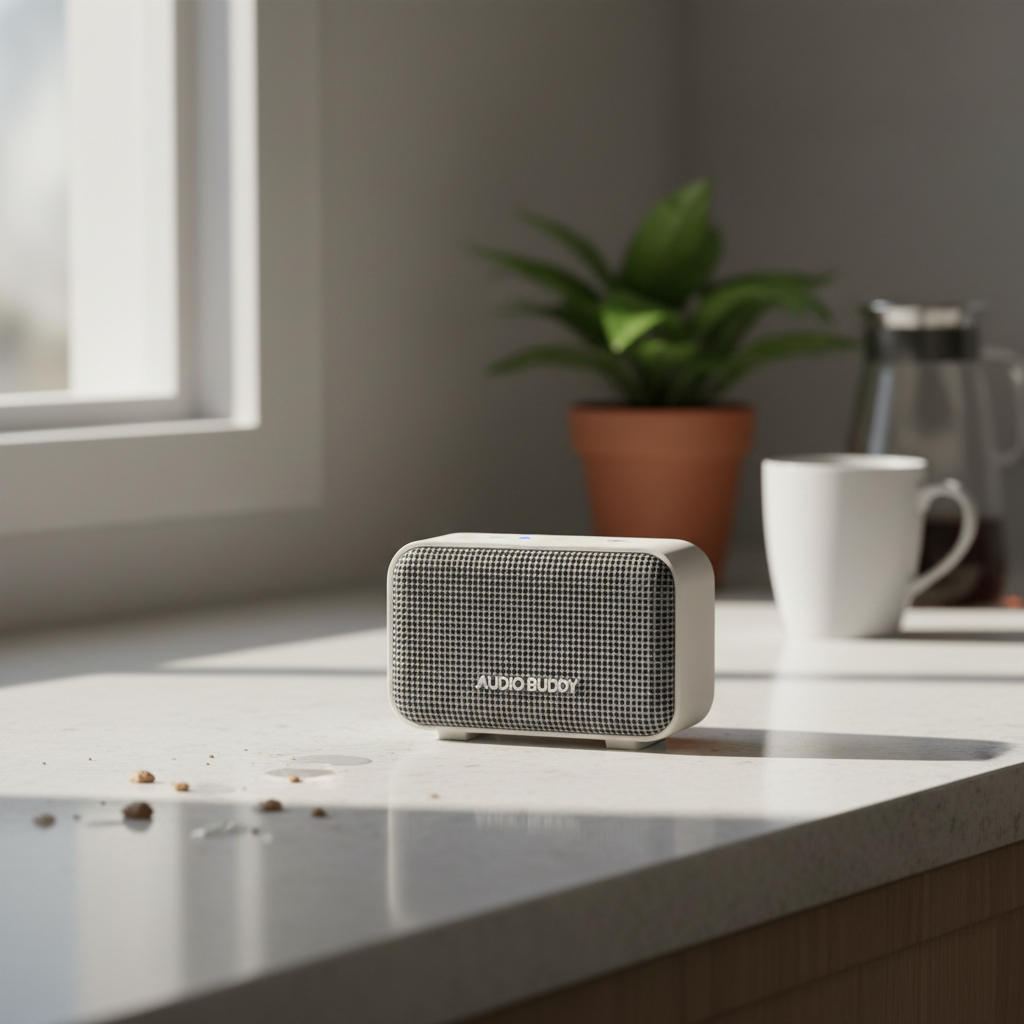
What “Budget” Really Means in 2026 (and what it should include)
For most buyers, “budget” lands in three tiers, and each tier has different expectations. If you hold the wrong expectation, any speaker will feel like a bad deal.
- Under $50: best for personal listening, small rooms, casual outdoor hangouts, usually limited bass and simpler mics.
- $50–$100: the real sweet spot for balanced sound, usable loudness, and better water resistance.
- $100–$150: often “budget-premium,” where you may get better tuning, stronger bass, and nicer build, but you still want value.
In 2026, a “good budget speaker” should usually cover: USB-C charging, a stable Bluetooth connection, battery life that holds up in real volume levels, and at least some splash resistance. Missing one of those is not always a deal-breaker, but it should lower the price you’re willing to pay.
Quick comparison table: choose your type in 30 seconds
If you’re stuck, start here. Pick the row that matches how you’ll actually use it, then shop within that lane.
| Use case | Priorities | What to look for | Common mistake |
|---|---|---|---|
| Small apartment / desk | Clarity at low volume | Warm tuning, strong mids, low hiss | Buying “party loud” minis that sound thin quietly |
| Backyard / small group | Loudness without harshness | Larger driver size, good limiter behavior | Chasing max volume numbers only |
| Pool / beach | Durability + battery | IP rating, rubberized build, secure port cover | Assuming “water-resistant” means waterproof |
| Travel / carry daily | Weight + fast charging | USB-C, strap/clip, compact shape | Picking heavy cylinders that stay at home |
| Calls / meetings | Mic quality | Noise reduction, sidetone, stable connection | Expecting “speakerphone” to work well outdoors |
Why budget speakers disappoint (real reasons, not just “cheap parts”)
A lot of frustration comes from mismatched physics. Small speakers can sound great, but they can’t break the rules of size, battery, and airflow.
- “Big bass” tuning that collapses at volume: many budget models boost bass at low levels, then clamp down hard when you turn it up, so the sound goes flat.
- Battery specs measured at low volume: the advertised hours often assume gentle playback; real listening at 50–70% volume can be noticeably shorter.
- Harshness around vocals: cheaper tuning sometimes pushes the upper mids so vocals cut through, but it can become fatiguing.
- Weak Bluetooth stability: crowded apartments, gyms, and parks create interference; better antennas and firmware matter more than people think.
- Confusing “waterproof” language: splash-proof is not the same as being safe near a pool, and saltwater is a different kind of trouble.
According to Federal Trade Commission (FTC), consumers should watch for marketing claims that are misleading or unsupported, which is a useful mindset here too: treat vague durability or battery claims as “to be verified,” not as promises.
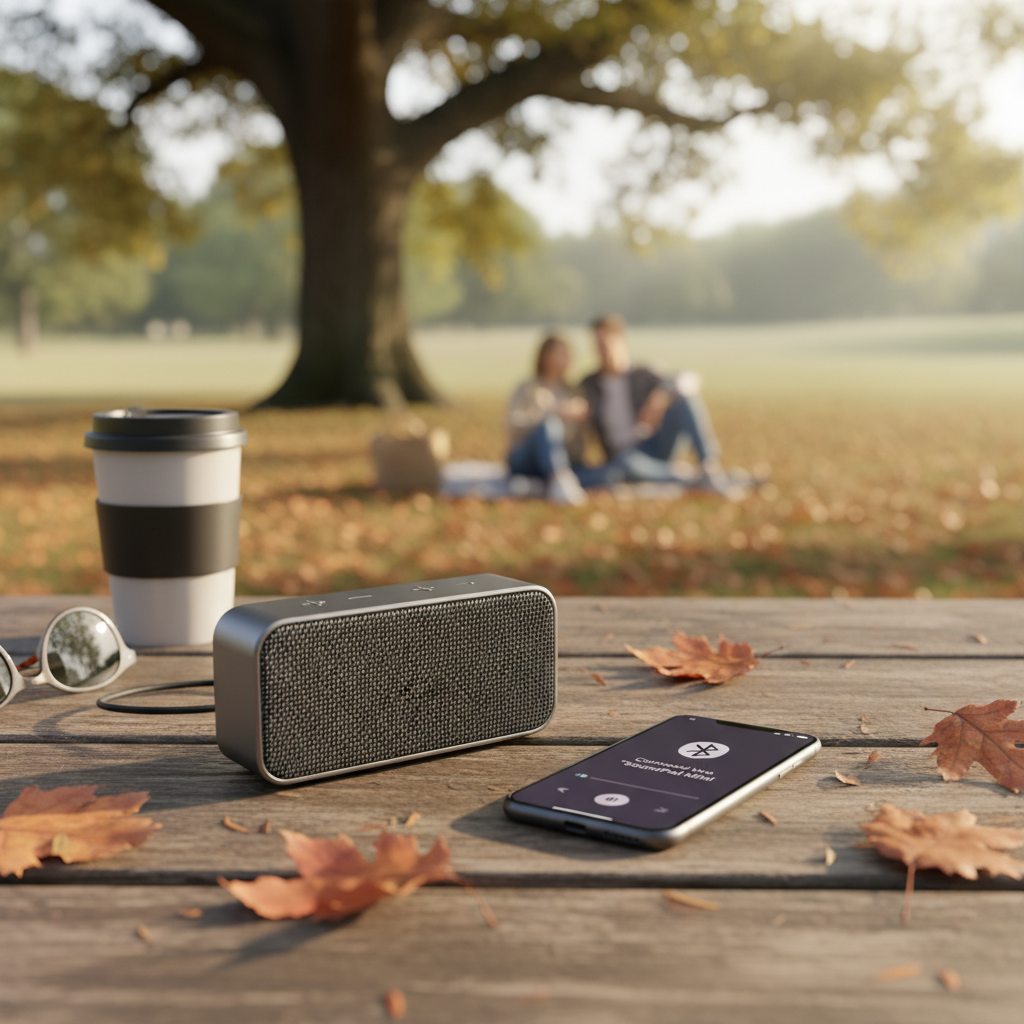
Self-check: what you should verify before you buy
Before reading any “top picks,” answer these quickly. This is the part people skip, then wonder why a highly rated product feels wrong.
- Main setting: indoors, outdoors, or mixed?
- Typical distance: phone in pocket, on table, or across the yard?
- Volume habit: background (low), active listening (mid), or “carry the group” (high)?
- Sound preference: more bass, more vocal clarity, or “balanced”?
- Durability needs: will it get tossed in a bag, used near water, or used with kids?
- Must-have features: USB-C, aux-in, speaker pairing, built-in mic?
If you’re mostly outdoors and you like louder listening, it’s usually smarter to buy a slightly larger model in the $70–$120 range than to buy a tiny one and push it to 90% volume all the time. You’ll often get cleaner sound and better battery behavior.
How to shop smarter: features that matter (and the ones that rarely do)
Sound and loudness: trust design cues more than watt claims
Watts are messy in consumer audio because brands measure differently. Instead, look for clues: a larger driver, a stable cabinet, and credible reviews mentioning “clean at high volume.” If reviewers say it gets sharp or rattly past 60%, that’s your ceiling.
Battery: look for charging convenience, not just hours
Real-life value comes from how easy it is to keep topped up. USB-C is the baseline; fast charging is a bonus. Power bank output can be convenient, but in budget models it sometimes trades off size or weight, so only pay for it if you’ll use it.
Durability: IP ratings and build details
IP ratings can be helpful, but “water resistant” still leaves room for interpretation. If pool or beach use matters, favor models that clearly state an IP rating and have covered ports. If you’re unsure, keep it away from water and consider a more rugged option.
Bluetooth and codec support
Most people do fine with standard Bluetooth audio. Fancy codec names matter more if you’re picky and both your phone and speaker support them, and even then, the tuning often dominates what you hear. For best budget portable speakers 2026 shopping, prioritize connection stability and latency that feels OK for videos.
Pairing and stereo
Stereo pairing can be great value if you might buy a second unit later. The catch is ecosystem lock-in: pairing is easiest within one brand and model line, so choose a speaker you won’t mind doubling down on.
Practical buying paths (pick one and stop overthinking)
Here are a few “paths” that match how people actually buy. Each path tells you what to prioritize and what to ignore.
Path A: “I want the safest all-around buy under $100”
- Prioritize: balanced tuning, USB-C, reliable Bluetooth, at least basic water resistance
- Skip: extreme bass claims, oversized LED light shows, gimmicky EQ presets
- Do this: read 5–10 recent reviews focusing on high-volume behavior and battery at 50% volume
Path B: “Outdoor sound matters more than size”
- Prioritize: larger cabinet, good handle/strap, rugged build, IP rating
- Skip: ultra-compact designs that need to be maxed out
- Do this: choose a model that sounds comfortable at 60–70% volume, your ears will thank you
Path C: “I travel, I want small, I hate fuss”
- Prioritize: compact shape, USB-C, quick pairing, physical buttons that are easy to use
- Skip: huge bass radiators that add bulk
- Do this: check weight and dimensions, if it won’t fit your bag pocket, it won’t travel
Path D: “Calls and occasional music”
- Prioritize: microphone quality, stable connection, good echo control
- Skip: expecting miracles outdoors; wind noise is still wind noise
- Do this: test in your noisiest room during the return window
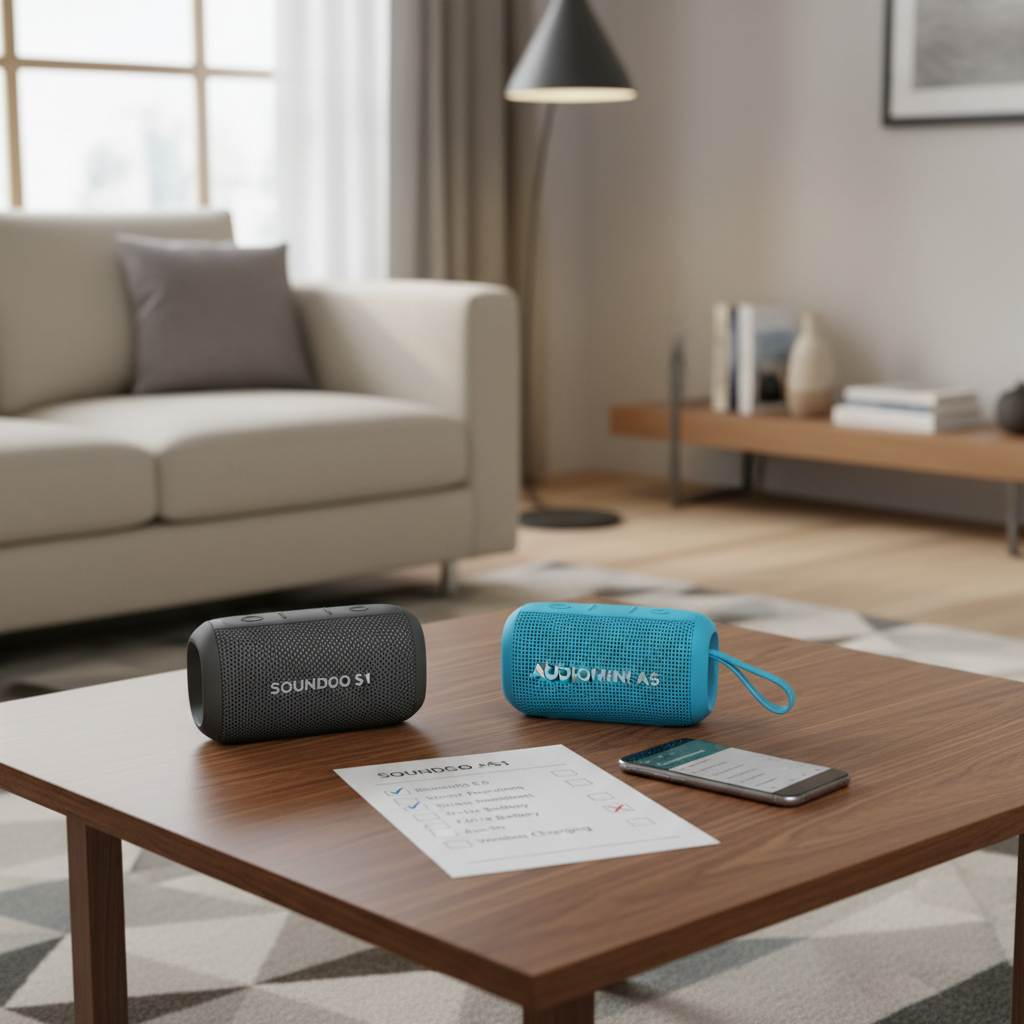
Hands-on testing you can do in 10 minutes (even if you’re not “an audio person”)
When your speaker arrives, don’t just play one song and call it done. Do a quick test loop while returning it is still easy.
- Low-volume test: play a podcast or vocal track quietly, check for hiss and muffled speech.
- Mid-volume test: play your “normal” music, listen for balance, vocals should stay clear without sounding sharp.
- High-volume test (brief): push to 80% for 30 seconds, listen for rattles, pumping, or sudden bass drop.
- Distance test: walk to the next room or outside, see if it stutters.
- Battery reality check: use it normally for an evening, note how fast it drops, that’s more useful than spec sheets.
If it fails one test but nails everything else, decide whether that weakness hits your main use case. The “perfect” option in the budget tier is rare, and that’s okay.
Common mistakes that waste money
- Buying too small for your space: a tiny speaker in a big backyard forces max volume, which sounds worse and drains battery.
- Overpaying for app features: some apps are great, many are clunky, and you might never open them after week one.
- Ignoring return policy: sound preference is personal; a flexible return window reduces risk.
- Assuming “stereo” is automatic: some models need a specific second unit, others require an app, check before you commit.
- Confusing rugged with heavy: weight can help sound, but it can also make the speaker a “stay-at-home portable.”
Conclusion: the simple way to land a great pick
The best budget portable speakers 2026 picks are usually the ones matched to your real listening habits, not the ones with the boldest box claims. If you choose the right size for your space, verify USB-C and durability needs, and do a quick high-volume check during the return window, you sidestep most disappointment.
If you want a clean next step, write down your top two use cases and your max budget, then shop within one “path” above, you’ll finish faster and end up with a speaker you actually use.
Key takeaways
- Size and tuning matter more than watt numbers for loudness and fullness.
- Battery claims often assume low volume, test your real pattern early.
- IP ratings and covered ports are practical signals for outdoor durability.
- Pick a buying path based on use case, then stop chasing specs that won’t change your day-to-day.
FAQ
- What is the best budget portable speaker in 2026 for most people?
Usually it’s a mid-size model under $100 with balanced sound, USB-C, and dependable Bluetooth. The “best” depends on whether you listen indoors, outdoors, or mixed. - How many watts should a budget portable speaker have?
Watt specs are hard to compare across brands, so they’re not a reliable shortcut. Look for reviews that mention clean sound at your target volume and a cabinet size that fits your space. - Is it worth paying extra for an app EQ?
Sometimes, especially if the stock tuning is too bassy or too bright. But many people set it once or never touch it, so don’t pay a big premium for the app alone. - Do budget speakers last, or do batteries wear out fast?
Batteries wear over time in any portable device. Keeping the speaker out of extreme heat and not storing it fully drained can help, but lifespan varies by model and usage. - Are waterproof speakers safe for pools and beaches?
Some are, but “water resistant” is vague. Check for a clear IP rating and remember saltwater and sand can still cause damage, when in doubt, be cautious. - Can I use a portable speaker for Zoom calls?
You can, but results vary. Indoor calls in a quiet room usually work better than outdoor calls with wind and background noise, test during the return window. - Should I buy one bigger speaker or two smaller ones for stereo?
One bigger speaker often gives stronger bass and simpler setup. Two smaller speakers can create wider sound if pairing is reliable and you actually plan to use both.
If you’re shopping for best budget portable speakers 2026 and you’d rather not wade through spec sheets, start by picking your main setting and volume habit, then narrow to a short list you can realistically test and return, it’s the most “budget-friendly” move in the long run.